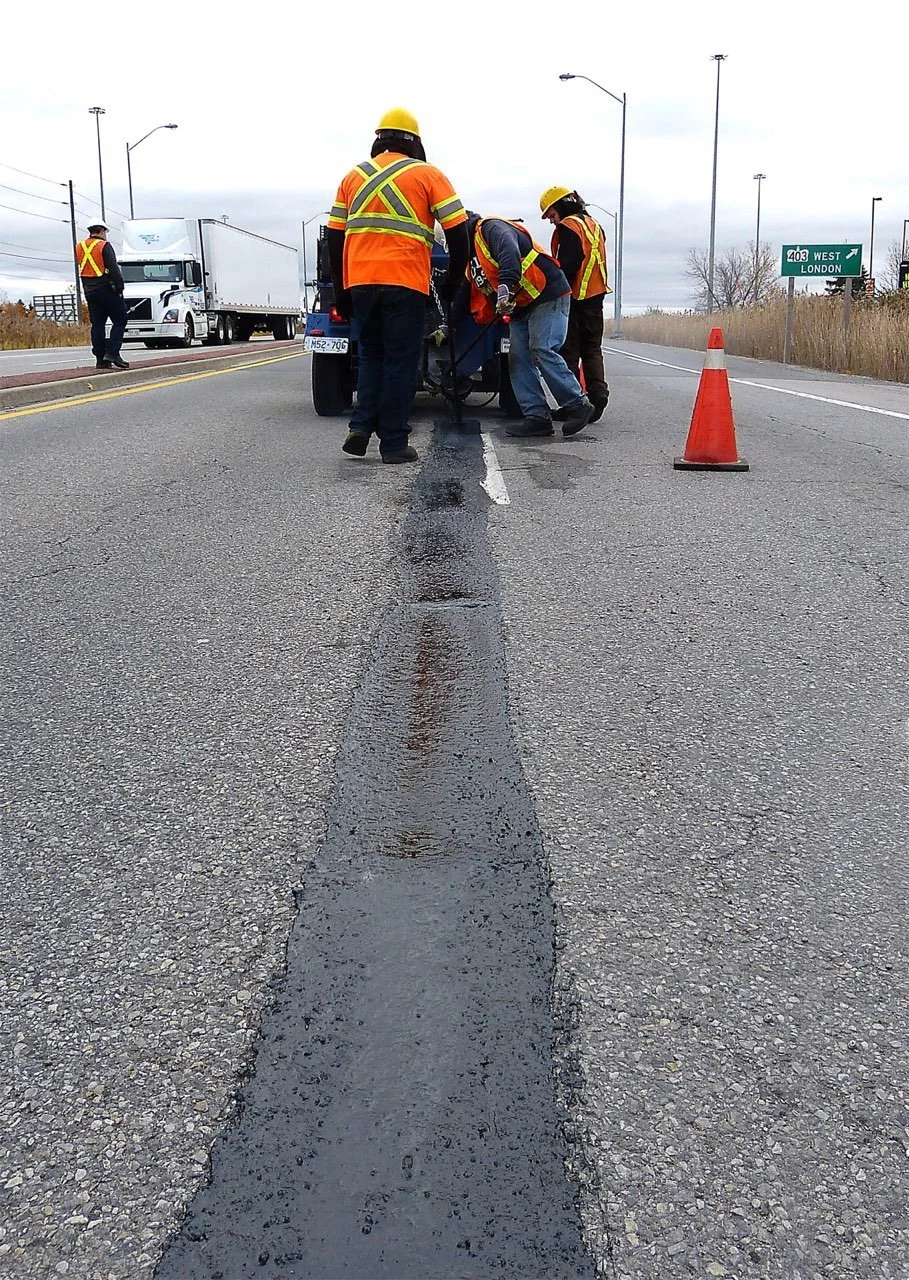
Crack Sealing
When an asphalt pavement surface begins to fail, it is often due to cracking that has been neglected. Age, climate change, fatigue and base movement all contribute to cracking, but the biggest enemy is water.
As part of a pavement management system, crack sealing can reduce pavement deterioration by restricting water penetration into underlying base and sub-base layers. Sealing the cracks with a flexible rubberized asphalt that bonds to the crack walls and moves with the pavement will prevent water intrusion. Sealing is better than filling as it will last longer and cost less.
Crack sealing is one of the most cost effective preventative maintenance options available.
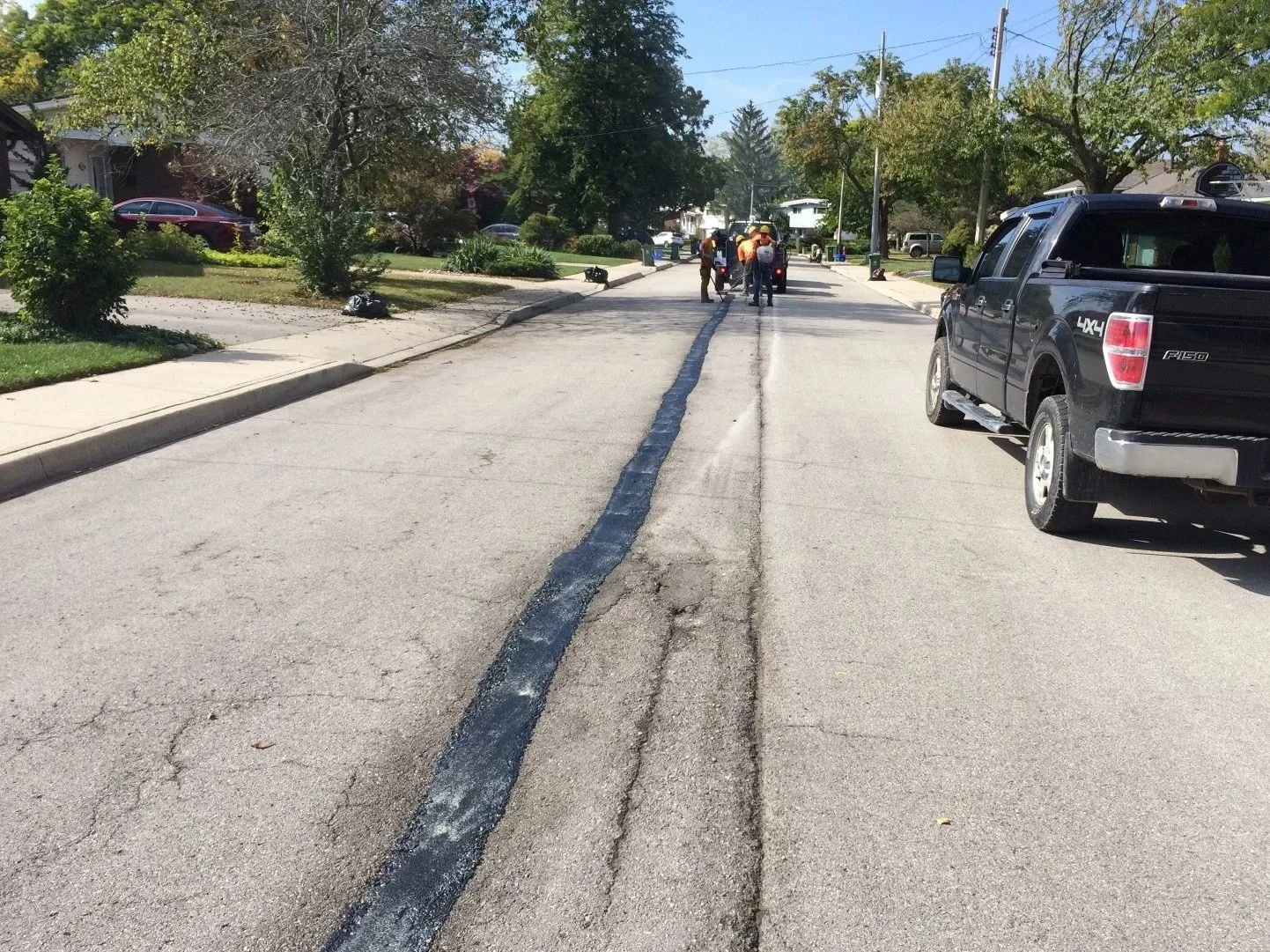
Cornell Construction offers a full line of crack sealing options and services including:
Clean and Fill
Rout and Seal
Hot air lancing
Hot pour crack sealing
Cold pour crack sealing
Advantages:
Extend pavement service life by preventing water from entering asphalt base, and sub base
Expands and contracts with pavement movement
Low cost effective pavement maintenance technique
Minimal traffic interruptions
Slows pavement deterioration